
Case study 06 · Executive reporting
Built Executive Reporting That Gave Portfolio Leaders Reliable Visibility and Faster Decisions
How did executive reporting improve portfolio visibility and decisions?
I designed dashboards around executive decision needs, established a reporting rhythm and created escalation rules so leaders had a consistent portfolio view and clear paths to action.
Problem
- No consistent view of delivery progress or risks
- Decisions were routinely delayed by information gaps
- Escalation rules were undefined; issues surfaced too late
Actions
- Designed dashboards tailored to executive decision-making needs
- Established reporting rhythms with a defined cadence and ownership
- Created escalation rules with clear triggers and resolution paths
Controls
- Executive dashboard with portfolio red/amber/green (RAG) status on one page
- Reporting calendar with a standing cadence and escalation triggers
- Escalation framework with tiered triggers and named accountability
Outcome
- Leaders gained consistent portfolio visibility without chasing updates
- The reporting rhythm turned reactive conversations into structured decisions
- Teams focused on action, rather than preparing and formatting reports
Key insight from this engagement
Designing reporting around the decisions leaders needed to make gave it a clear purpose. Dashboards, reporting rhythms and escalation rules worked together.
Skills applied
- Executive reporting
- PMO
- Portfolio management
- Governance
- Risk management
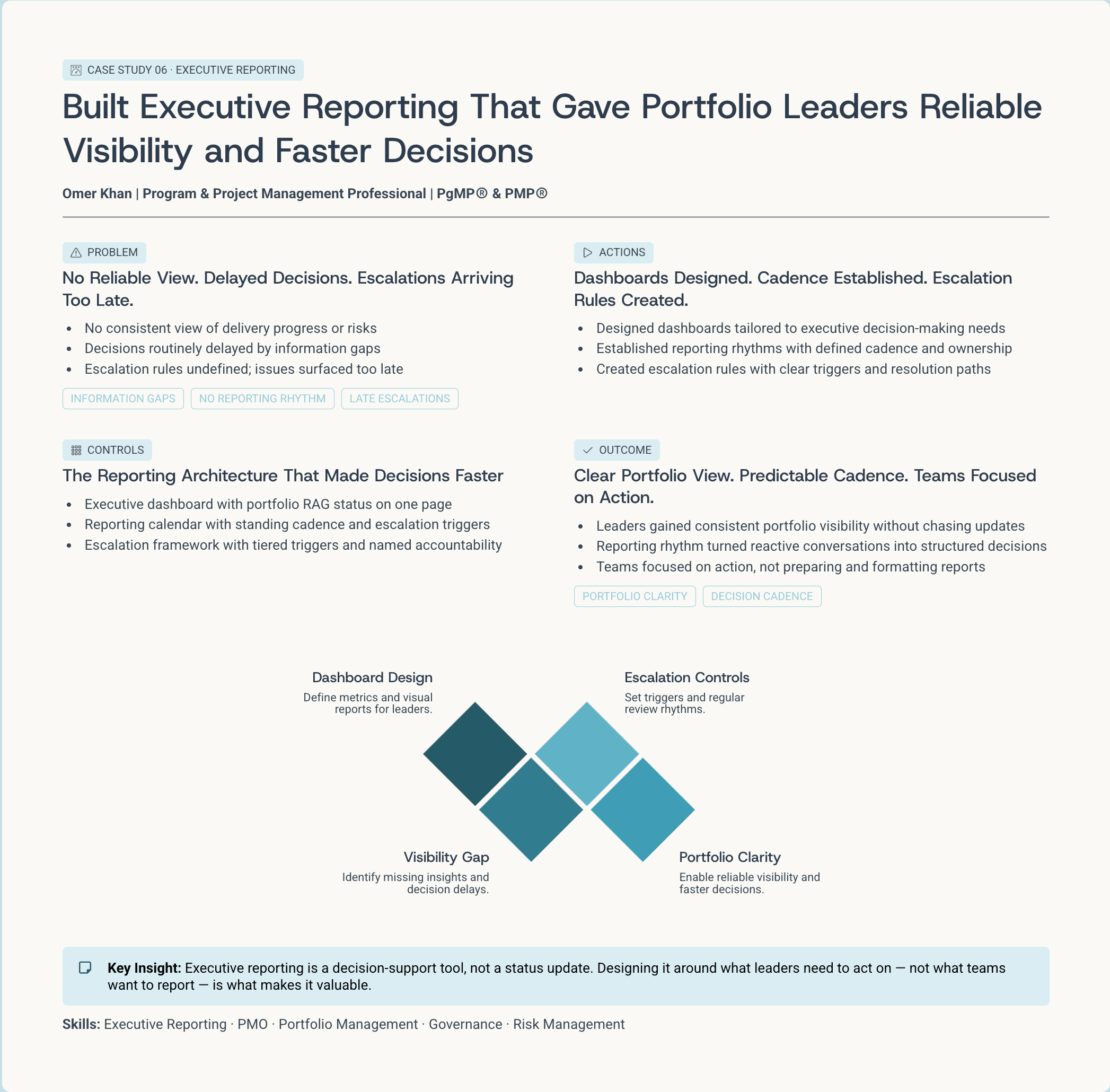
Source: Omer Khan’s supplied case-study summary.
Facing a similar challenge?
Discuss your challenge with Omer or use the steering committee update to structure your next conversation.
Read: Governance should help delivery